
Introduction
If you’ve been in the SEO or marketing world for a while, you’ve probably heard the term Digital PR thrown around. But what does it actually mean? And why is no one talking about its real power—beyond just “getting backlinks”?
Most marketers treat Digital PR as an afterthought, a side dish to their main SEO strategy. But when done right, it’s a traffic-driving, authority-boosting, brand-elevating powerhouse.
In this post, we’ll break down:
✔ What Digital PR really is (and how it differs from traditional PR & SEO)
✔ The biggest myths holding businesses back
✔ What Digital PR is actually good for (spoiler: it’s not just backlinks)
✔ How to tell if a Digital PR agency knows what they’re doing
By the end, you’ll see why most people are missing the mark—and how you can use Digital PR to dominate search rankings, earn media placements, and drive real business growth.
(Oh, and if you want to see how I’ve used Digital PR to get clients on Google’s Page 1 for web, news, video, and map results, grab my free Video Case Study at offer.seoqueen.com.)

What Is Digital PR? (Beyond the Basic Definition)
At its core, Digital PR is the process of earning online visibility, credibility, and backlinks through media coverage, influencer partnerships, and strategic content placements.
But here’s where most definitions fall short:
Digital PR isn’t just about getting links—it’s about shaping your brand’s narrative in the digital space.
Traditional PR focuses on press releases and media relations to control public perception. Digital PR, on the other hand, combines:
- SEO strategy (targeted backlinks, keyword-rich content)
- Content marketing (data-driven stories, expert commentary)
- Brand authority (positioning your business as an industry leader)
How Is PR Separate from Digital Strategy?
A common misconception is that Digital PR is just PR with a few backlinks sprinkled in. Wrong.
- Traditional PR → Focuses on brand reputation, crisis management, and print/TV coverage.
- Digital PR → Focuses on online visibility, SEO value, and measurable ROI (traffic, rankings, conversions).
Example:
- Traditional PR Success = Getting featured in Forbes for a founder interview.
- Digital PR Success = Getting that Forbes link to rank for high-intent keywords, drive referral traffic, link to your domain strategically where it boosts your rankings, and boost domain authority.
The Big Myth: “Digital PR Is Just for Backlinks”
Yes, backlinks matter—Google ranks sites with strong, relevant backlinks higher. But if you think Digital PR is only for link-building, you’re leaving money on the table.
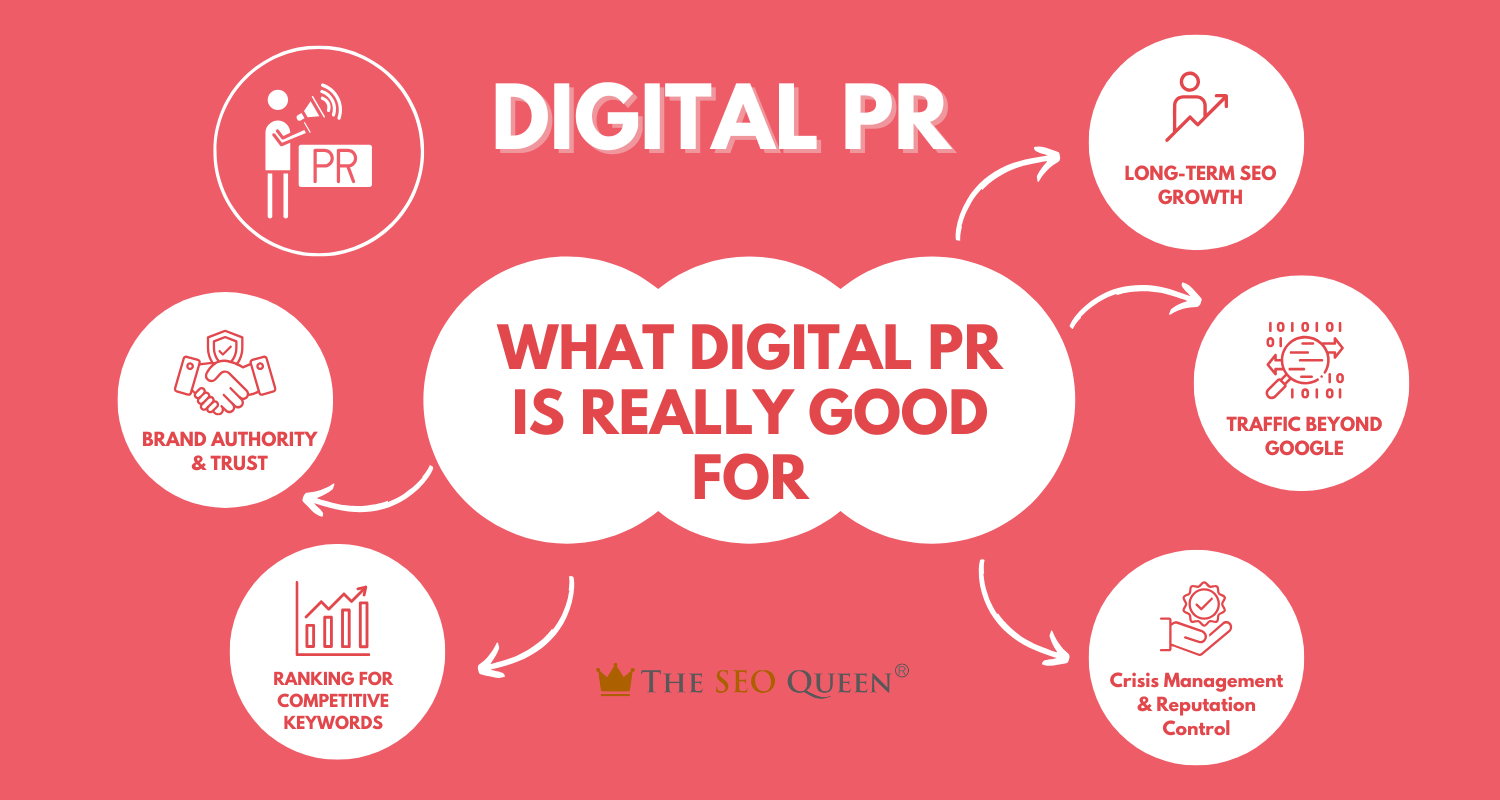
What Digital PR Is Really Good For:
1.Brand Authority & Trust
- Media features in top-tier publications (Black Enterprise, RollingOut, MSN.com) position you as an expert.
- Earned media builds credibility faster than ads ever could.
2.Traffic Beyond Google
- A single viral feature on a major site can send thousands of referral visitors.
- Unlike SEO (which takes months), PR can drive immediate traffic spikes.
3.Ranking for Competitive Keywords
- High-authority backlinks signal to Google that your site is trustworthy.
- I’ve used Digital PR to outrank competitors in industries like finance, SaaS, and eCommerce.
4.Crisis Management & Reputation Control
- Digital PR helps you control the narrative before negative press spreads.
5.Long-Term SEO Growth
- Unlike paid ads (which stop when you stop paying), PR placements keep working for you years later.
How Digital PR Has Evolved (And What to Look for in an Agency)
Gone are the days of spamming journalists with generic pitches. Modern Digital PR is data-driven, creative, and results-focused.
Red Flags in a Digital PR Agency:
❌ They promise “guaranteed backlinks” (real PR is earned, not bought).
❌ They don’t align PR campaigns with your SEO keyword strategy.
❌ They can’t show case studies with real traffic & ranking results.
What to Look for Instead:
✅ Proven media placements (Do they get clients in actual reputable outlets?)
✅ SEO integration (Are they building links that help you rank?)
✅ Creative storytelling (Can they turn dry topics into viral-worthy stories?)
How to Improve Your Digital PR Strategy
1. Start with Data-Driven Stories
- Journalists love original research, surveys, and trend reports.
- Example: The SEO Queen worked with a hair care brand, CurlyCoilyTresses.com and their National Media Placement in Black Enterprise got them a TV Interview in Tampa, Florida.
2. Leverage Expert Commentary
- Position your CEO or team as industry experts for quote-based features.
3. Repurpose PR Wins for SEO
- Got a media feature? Blog about it, share it on social media, and link to it internally.
4. Track More Than Just Backlinks
- Monitor referral traffic, branded search volume, and ranking improvements.
Final Thoughts: Digital PR Is Your Secret Weapon
Most businesses treat PR as an afterthought—meanwhile, savvy brands are using it to:
✔ Skyrocket domain authority
✔ Drive consistent organic traffic
✔ Outrank competitors without heavy ad spend
If you’re ready to see how I’ve used Digital PR to dominate Google’s first page (for web, news, and video results), grab my free Video Case Study here:
👉 Download the Case Study
Up Next in This Series:
- How to Write a Digital PR Pitch That Actually Gets Responses
- The Best Digital PR Tactics for Local Businesses
- Why Your SEO Strategy Is Failing Without PR
What Digital PR questions do you have? Drop them in the comments! 👇
